9 minutes read

Salla Blog
Salla Growth Team

Global e-commerce sales are expected to reach $5.7 trillion worldwide in 2023, making e-commerce a lucrative option for organizations and individuals seeking profitability through the online world. However, e-commerce is a changing industry, and its trends are constantly renewing, which leaves leaders and employees in companies with a demand to look into and read books about e-commerce.
We will present the most important books on e-commerce that have been read by many business and commerce leaders.
Salla: The Future of E-commerce – An Easy Platform to Start Your Store
Best Books on E-Commerce and Entrepreneurship:
First: Book: The Personal MBA by Josh Kaufman

This book, which is considered one of the most important books on e-commerce, was recommended by Nick Disabato, founder of Draft.
The book explains four ways for a sales growth strategy, the iron law of the market, the pricing uncertainty principle, and many concepts of marketing, sales, negotiation, production operations, and systems design in simplified mental models that you can realistically apply to your business.
It is said of this book that it is not only a book that teaches about business, but even gives advice on self-care, avoiding subjective biases, protecting your boundaries, and maintaining your respect.
Second: Book: Everybody Writes by Ann Handley

This book was recommended by Tina Donati, Marketing Manager at an agency specializing in digital marketing.
This book is one of the best books on e-commerce that provides a guide to writing and highlighting content that matters to customers and attracts their attention, so you must apply the best content strategy, because our words are our currency online.
Writing is an art, and it can be learned through discipline and practicing the guidelines of professionals.
Third: Book: The Art of Gathering by Priya Parker

This book, considered one of the out-of-the-box e-commerce books, was recommended by Kaitlyn Tyndall, Program Manager at Shopify.
This book offers advice on purposeful and productive team gatherings, which are essential for employees within e-commerce companies. The author has managed many gatherings around the world and at high levels, so she provides advice based on real experience about what works and what does not.
Fourth: Book: DotCom Secrets by Russell Brunson

This book was recommended by Connor Gross, co-host of the Next Gen podcast.
The book is considered one of the e-commerce books that cares about online marketing and presents the results of thousands of tests conducted to understand e-commerce success. It helps leaders and CEOs rebuild their companies' marketing systems, identify the ideal customer, and scale the online store. The book also explains the concept of value ladders in acquiring customers and maintaining this relationship.
Fifth: Supermaker by Jamie Schmidt
This book was recommended by Kristin LaFrance, Community Manager at Repeat, a platform specialized in creating SaaS experiences.
Supermaker was born out of the author’s experience building Schmidt’s Naturals, a natural products brand, and growing it to more than 30,000 stores. Seven years later, Unilever acquired Schmidt’s Naturals in a nine-figure deal.
This book is considered one of the entertaining and executive e-commerce books for leaders and CEOs, where Jaime offers advice on branding, product development, social media marketing, PR, customer engagement, and scaling.
Sixth: Building a StoryBrand by Donald Miller

This book was recommended by Troy Petrunoff, Marketing Manager at Every Man Jack, a men's grooming brand.
Donald presents in this important book, as one of the books on e-commerce, the way to write stories about it to attract customers, where the book presents the seven universal elements of writing an inspiring story.
The book explains the real reason behind why customers make purchases and what can be done to simplify your brand message so they can understand and align with it. It will also help you engage your customers to see success in your e-commerce.
Donald summarizes the benefit of storytelling for your business as being able to summarize your brand and describe your products in just one sentence.
Seventh: Book: Atomic Habits by James Clear

This book was recommended by James Sowers, Head of Marketing at The Good
The book is considered one of the indirect e-commerce books, as it provides tips for building the personality of entrepreneurs and leaders to establish habits and change behaviors to achieve business success. James describes the benefit of the book by saying:
"Before you can successfully run a business, you must be able to run yourself."
Eighth: Book: The E-Myth Revisited by Michael E. Gerber

This book was recommended by Michelle Eibin, founder of Jettproof, a clothing brand.
The book is considered one of the books on e-commerce that offers a way to run your business with a focus on growth as one of the pillars of your company's success.
Ninth: Book: The 7 Habits of Highly Effective People

The book focuses on the most important principles for solving personal and professional problems to lead your team and company effectively and successfully. One of the most important principles it addresses for managing any business, whether online or offline, is focusing on searching, then understanding.
Tenth: Seth's Book Linchpin by Seth Godin
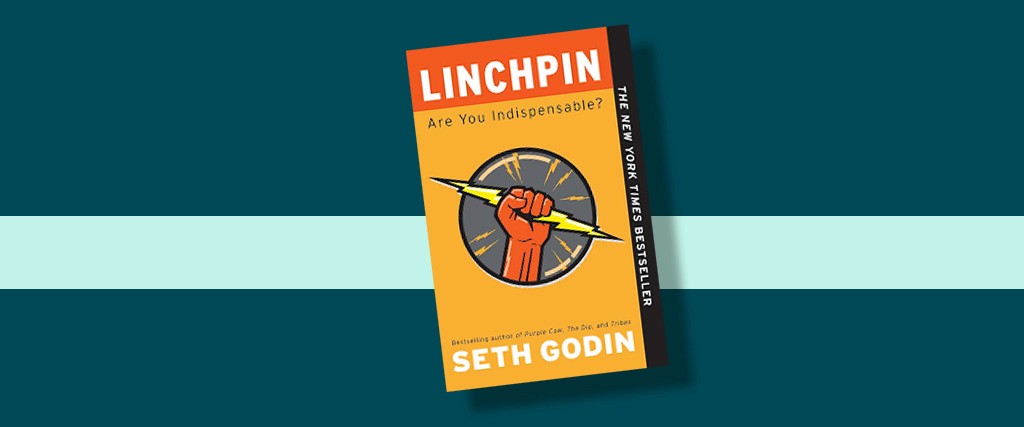
This book was recommended by Lily, Head of Growth at Three Ships, a natural skincare brand.
Businesses cannot thrive without a work culture, and the book introduces the essential elements of people who figure out what to do when there is no rulebook. Among their most prominent traits: they love their work, and they challenge and delight their peers and customers.
Best Books on E-Commerce and Investment
Most entrepreneurs are interested in reading and gaining knowledge about the world of investment, from real estate to cryptocurrency, as well as bonds and stocks.
We will present the top five books on e-commerce and investing:
First Book: The Bond King

Bill Gross was a gambler before he was known among investors as the Bond King. In 1966, he graduated from college and then went to Vegas with a net worth of $200 and a talent for counting cards. After making $10,000 and facing countless casino bans, he then enrolled in business school.
The Bond King is the story of how that privileged kid made his own casino fund, and how over decades Bill Gross turned a sleepy bond market into a volatile, high-stakes, high-reward game.
Bill Gross founded Pimco, one of today's most powerful investment firms, and helped reshape the financial system in the wake of the recession.
Journalist Mary Childs says that to understand the winners and losers of today's money game is to understand the bond market—and to understand the bond market is to understand the Bond King.
Second Book: The Intelligent Investor

The most important lesson from Benjamin Graham's book is: "Don't lose." Of course, it's easier said than done, so read the book.
Published in 1949, the book is still in print today because it provides investors—whether beginners or those with some knowledge and success—with the hammers and anvils of value investing: which is buying quality stocks.
Graham largely avoids the practice of analyzing securities in favor of expanding on investing principles and investor attitudes, noting that an investor's intelligence has nothing to do with IQ or SAT scores. It simply requires patience, discipline, and an eagerness to learn, and you must be able to harness your emotions and think for yourself.
Chapters talk about investing versus speculation, the investor and inflation, general portfolio strategy, stock selection for both enterprising and defensive investors, company comparisons, and many other topics.
Third Book: Patient Capital

The author cites the Rockefeller family fortune as an example of using patient capital. John D. Rockefeller turned a $4,000 investment in the Standard Oil refinery into the primary source of the family's vast holdings. Two generations later—led by his grandsons, particularly Laurance—long-term capital led to the development of Eastern Air Lines, military contractor McDonnell Aircraft Corp (which eventually merged into Boeing Co), and parts of General Motors.
Fourth Book: The Billionaire’s Apprentice

The book talks about how to invest in the global South, such as:
- The South Asian diaspora and the rapid rise of their community in the United States in influential areas of business and professions.
The influx of South Asians into the United States after 1965, when US immigration laws were relaxed.
An Othello-Iago-like story, a criminal coupling of a native-born Indian immigrant who headed the consulting firm McKinsey & Company, named Rajat Gupta (Othello), with Sri Lankan-born immigrant math genius Raj Rajaratnam (Iago), who became a billionaire.
Fifth Book: The Psychology of Money

The book takes the reader on a journey through 19 short chapters that illustrate the sometimes strange ways people think about money and the behavioral psychology surrounding it, and then suggests ways to become more financially secure. One example: author Morgan Housel recommends staying wealthy, rather than getting wealthy. To prove this point, he draws on the life and work of Berkshire Hathaway Chairman and CEO Warren Buffett, who started investing as a child and simply loves making money.
Housel maintains that the point of having money is the freedom it gives people to make choices that make them happy.
The book also presents the most important topics in finance, which are unexpected and interesting to ponder.
Tips to Start an Online Store in 2023

According to some research, new e-commerce store owners can expect total business costs to reach $40,000 in the first year, which are paid back to the owner through profit margins.
But the good news is you don't need $40,000 in cash to start an e-commerce business. While many entrepreneurs (66%) use their personal savings to fund their businesses (respondents could select more than one source of funding), they also used financial support from friends and family (23%) and personal loans (21%).
Keep the following tips in mind as well:
Forget First-Year Profitability
Starting a successful e-commerce business is a marathon, not a sprint. Do not measure business success by profitability in your first year. Give yourself an 18 to 24-month runway to get your business off the ground. Spend your first year testing, iterating, reinvesting, and growing your sales in your business using budgetary guidelines.
Know Your Target Audience
Outside of product development or sourcing, you will have to spend most of your time targeting new customers. The challenge you will face is getting your products in front of the right customers—those who will actually buy on your site. Understanding these people can help you reach them faster.
Sell a Product in Demand
Take a look at today's top retailers—Allbirds, Tushy, Bombas—and you'll notice they all sell top-tier products, and as they say: "product quality matters; because a good product sells itself."
You can make use of the following tools to find out market demand:
Trends.co: Data that gives you trend forecasting and business opportunities before they become popular.
Google Trends: To research the main topics people are searching for.
Invest in Links and Communication
One of the most important tips that can be given to new e-commerce stores is to have a communication and link-building plan. These methods can help boost Google SEO rankings.
As James Taylor, SEO Consultant, says: "The sooner you have an approach to link building and pushing authority to your site in its right place, the quicker search engines can recognize your website as an authority in its niche."

Salla Blog
Salla Growth Team
189
50
Featured Writer
Creativity and innovation
The 10 Best E-commerce Books Important for Developing Your Business
Global e-commerce sales are expected to reach $5.7 trillion worldwide in 2023...
9 minutes read
Salla Blog

Creativity and innovation
The Glory of Entrepreneurship in 3 Points
In the contexts of creativity and innovation in entrepreneurship, especially e-commerce, there is a triangle of glory gathered in a brief saying: “Care about people, products, and profits,” in this sequence...
5 minutes read
Salla Blog