12 minutes read

Salla Blog
Salla Growth Team

How Do You Price Your Products and What Is Its Impact on Your Business?
After we discussed in detail how to create an online store, we will present here in this article how to price your products—whichever type of product you sell—and what is its impact on your business? And the most important considerations to take into account when pricing, especially since shoppers these days are very smart, so you must be at the same level too.
Salla, the Future of E-Commerce, is an Easy Platform to Start Your Business
But let us first know: What is meant by product pricing?

Product pricing can be considered the art of translating the product's value into a specific number at a certain time, the key to which is building value for the product and determining the appropriate price for it, with the aim of increasing sales and achieving profits.
Why do we price products in the first place?
Product pricing is a clear indicator of how well you understand the nature of the market and the audience and how your product's journey will be, and what the profits and returns are from the process of pricing the product correctly and systematically, as well as knowing the pros and cons of online shopping, meaning it is an important decision and a cornerstone in the structure of your project.
In short, product pricing helps to:
Product pricing is one of the essential elements of the promotion mix.
The success or failure of market and product promotion campaigns.
Important for the audience in terms of their ability to compare products and their prices.
Helping customers compare the price with the value and benefit of the product.
Expected insight into the profits of the project.
Second: What are the steps for pricing a product?

We must note that determining product pricing methods differs according to the type of product, and therefore the process of determining the appropriate price requires your experience and specialization in the field of products; pricing meals is different from the way handmade products are priced, which also differs from the clothing pricing mechanism .. and so on.
The key to product pricing is mapping out a buyer persona; meaning, defining the size and shape of the buyer persona has a cascading effect on your product, marketing strategy, as well as your financial planning.
We can build the buyer persona by answering these questions:
How old are they?
Where do they reside?
What is their motive for buying?
What are their interests related to your product?
What are their favorite products from competing companies?
What are the top three marketing channels they are currently active on?
What is the value offer they care about?
What price are they willing to pay?
What are the concerns regarding your products?
What are their concerns about your company?
Conducting market research for customers
The market research step involves collecting demographic information about your customers, think about surveys and feedback questionnaires to gather more general information.
Helper tools:
A tool like Survey Monkey will help you create feedback questionnaires,
The Promoter.io tool allows the integration of surveys into emails.
You can also benefit from using tools like Facebook Audience Insights or Google Analytics Audience Reports to see what kind of people visit your site.
Side tip:
Try some manual mining, go to your competitors' blogs and social media sites, see who likes and comments on their content, then look at competing customers to learn more about the broader market.
Value Measurement Analysis
It is important to know which products customers value, by launching a survey “to rate the product's value on a scale from 1 to 10”, as knowing these numbers enables you to turn them into ideas to develop your product and site.
One of the best ways to request your customers' preferences is to use Max Diff analysis, present your customer with several options, and ask them to choose the option that offers the most value, and the other that offers the least value.
Side tip:
You can perform a Max Diff analysis in two steps by first asking your customers to choose their most and least valued products, then asking them to choose the most and least valued features about these products, then analyze these tests and take the necessary actions.
4. Performing Price Analysis

Your customers' willingness to pay is a reflection of the value they see in your products, so it is the best metric especially when determining a value-based product pricing system.
A successful price analysis relies on the foundation of strong market research and feature and product preference analysis.
Market research will tell you how to segment customers when asking about price points, and your preference analysis helps you identify which products are most important to inquire about.
When conducting price sensitivity analysis, use the Pareto principle 80/20: focus on 20% of your products that provide the most value to 80% of the buyer persona.
Side tips:
Show consumers that your price reflects your product's value, and turn them into loyal customers, and also do not forget to use the previous psychological methods to convince consumers, and make sure that your offers are imprinted in the subconscious.
Adjusting your price leads to realizing how much customer experience and your company's brand can play a role in the value the customer sees in your product, remember that modern shoppers are smart, if your price is not good enough for them, you will not be able to convert them.
Remember that the product pricing process is not a rigid task, but requires a continuous effort to improve and adjust as the e-commerce company grows, like any other e-commerce process you need to run, there will always be room for improvement.
Third: What are the product pricing strategies?

There are countless ways to price products online, but some pricing strategies can result in significant losses, so you must ensure you choose the right product pricing strategy for your products.
Product pricing strategies are activities aimed at finding an appropriate and competitive price for the product or service, to motivate consumers to make a buying decision, taking into account a number of things such as product or service features, marketing goals, product demand volume, market conditions, market and economic trends, and competitor prices.
It is important to point out here that you can combine more than one strategy or adopt one of them when pricing your products and services.
2. Placing an expensive product on the left
This product pricing strategy relies on carefully organizing your category pages, namely by placing more expensive items on the left; because once the consumer sees an expensive item, any price after that will seem like a great deal to them, and motivate them more to part with their money.
Ogonowski says on the growcode website: “Designing similar category pages well motivates engagement and conversions, because it encourages visitors to click through to individual product pages and purchase.”
Example:
From home furniture company The Modern Shop shows how this strategy is used
There are smart strategies and techniques for displaying products in the online store, find out more through this link.
3.The best price based on value
It is considered a highly profitable strategy if used accurately; value-based pricing can significantly boost customer sentiment and loyalty, and it can also help you prioritize your customers in other aspects of your business, such as digital marketing and service.
Value-based pricing requires you to be constantly aligned with different customer profiles and buyer personas, and prices may vary according to your different customers.
4.Pricing based on competitors
Through competitor-based pricing, you can price your products slightly below your competitors or slightly above, depending on what suits you best. This strategy is known as competitor-based pricing, where it focuses on the current market price (or current rate) for a product or service, without taking into account the product's cost or consumer demand, instead, using competitors' prices as a benchmark for pricing its products.
Companies competing in a highly narrow space may choose this strategy because a slight price difference may be the deciding factor for customers.
Enticing customers with promotional offers
What many don't realize is that store owners make massive profits during offer seasons like White Friday (Black Friday) that might even exceed your expectations.
This trick is a major pricing strategy, employed by the most famous international stores in an epic way every year.
Example:
- AMAZON sales on Amazon Prime Day reached about 7.16 billion USD in 2019
While Alibaba's sales on Singles Day reached about 38.3 billion dollars within 24 hours in 2019.
5.Exploiting visual designs
This strategy focuses on influencing consumers' decisions through some visual cues in design, the key to product pricing here is the way you use design, this is done by using visual contrast between discount prices and original prices, via color or size to increase the disparity.
84% of marketing and digital creative professionals believe that companies following this strategy outperform their competitors.
Example:
Take a look at how the happysocks website applies this strategy, and notice how they use the red color to emphasize the low price, they even placed the discount percentage in a prominent place inside a red circle.
6. Product testing strategy
This strategy is characterized by offering a "sneak peek" into the full functionality of the software, and building trust with potential customers before buying, as many companies, especially software companies, use it; it relies on trying the product first before purchasing in the hope that users will eventually pay to upgrade or access more features.
7. Facilitating mathematical operations for the mind

Make sure to make calculations easy for the mind when comparing the previous product price and its price after discount, let the mind go through a simple calculation.
Example:
If the product price is $20, make the discounted price $15, this way the buyer can instantly know they received a discount of $5.
In contrast to if you put the discounted price in decimals like $13.54, here you will leave the buyer confused to calculate the gain they will get from the discount.
8. Relying on your products' uniqueness in pricing
The brands that apply this pricing method are known to provide a unique value through their products, and this is why they price themselves higher than other competitors.
It relies on glorifying the product, where companies increase the value of their products, to highlight that their products are high-value, luxury, and distinctive. Product pricing here focuses on the perceived value of the product rather than the actual value or production cost.
Fashion and technology are often priced using this strategy because they can be marketed as luxurious and unique.
9. Offering similar products at different prices
Have you ever decided to buy a suitcase online, and didn't know which type to choose? You are faced with many types, and can't make a decision?
Barry Schwartz describes this phenomenon in his book The Paradox of Choice: Why Less is More saying: "Americans have so many choices that they are paralyzed in making decisions."
To leverage this in pricing your products: set a small price difference even between similar products to encourage visitors to make a decision; price may be the distinguishing factor that encourages consumers to buy in such cases.
10. Reframing the Value Strategy
This strategy is called Reframing The Value, where you present the same product at the same price, but in a different way.
How?
Remember that a human buys with their subconscious mind more than their conscious mind, so every word you use while displaying your product for sale has an impact on the buyer's mind and completing the purchase process.
There is a big difference between telling someone that the value of renewing this program is $1188 per year, and that the value of using it monthly is $99. The impact of the two numbers is different on their subconscious, even though in reality there is no difference between them.
According to a neurological study on buyers, people usually anticipate loss if dealing with large amounts is involved, and they start hesitating to make a purchase decision, as opposed to dealing with small amounts.
Also, there are some words reflecting a low price that grab the buyer's attention more when used, for example: (only, discount, do not miss the opportunity, for a limited time... and others)
11. The Magic of Number (9) in Product Pricing
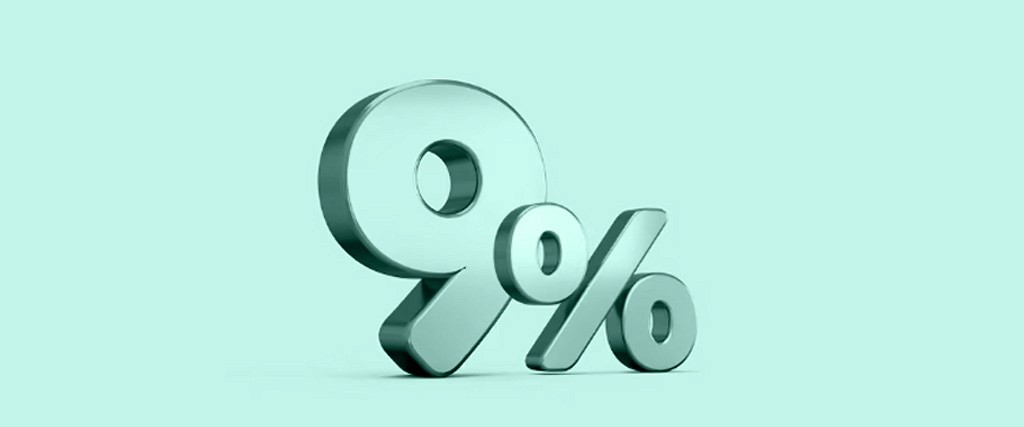
We often notice in product advertisements that they use the number (9) in pricing: 49.00 - 19.99 - 999. Questions then start repeating, why 999 and not 1000 even though we will pay the same value? What is the trick behind using the number (9) at the end of the product price?
I know it is an old trick and perhaps many realize it now, but it is still effective, and customers still tend to choose the number (9) with low and high-priced products, whether the amount was $49, $79, or even $99.
Scientific Experiment:
In a study conducted by both the University of Chicago and MIT, three versions of an illustrated clothing catalog were sent to a random sample of customers. The price of products in one of the versions was set to end with the number (9) like $39, while in the second edition, a price minor by $5 was set (i.e. $34), and in the third edition, a price higher by $5 was set (i.e. $44).
The result was a tendency for people to buy toward the price that contains the number (9), $39, by 40% more.
Finally:
Remember that the product pricing process is not a rigid task, but requires a continuous effort to improve and adjust as the e-commerce company grows, like any other e-commerce process you need to run and understand information about e-commerce, there will always be room for improvement.
Show consumers that your price reflects your product's value, turn them into loyal customers, and also do not forget to use the previous psychological methods to convince consumers, search to ensure that your offers are imprinted in the subconscious.
Pricing your products correctly will lead to realizing how much customer experience and your company's brand can play a role in the value the customer sees in your product, and remember that modern shoppers are smart, if your price is not good enough for them, you will not be able to win them over.

Salla Blog
Salla Growth Team
189
50
Featured Writer
Pricing
Product Pricing: With Professional Pricing Tools and Strategies
How do you price your products and what is its impact on your business? After covering in detail how to create an online store, we will show here in this article how to price your products—whatever type of product you sell—...
12 minutes read
Salla Blog

Brands
Essential steps to build a strong brand
If you mention "building a brand," the initial perception might be the brand's (appearance), the logo, or the trade name, but in reality, this is only a small part of the complete picture—of the "positioning" in the customer's mind...
9 minutes read
Salla Blog

Brands
Steps to register your trademark in Saudi Arabia
The importance of a brand lies in distinguishing your online store's goods and services from competing stores by defining the store's name and logo, and gaining the trust of customers,...
7 minutes read
Salla Blog

Brands
Product packaging is your brand's ambassador
In a highly competitive market, competitive advantage has become the winning card and the defining difference, and at the forefront of these advantages sits innovative product packaging, which can occupy a significant portion of a brand's advantage in the market...
12 minutes read
Salla Blog